During the Covid lockdowns, needing something interesting to do, I found that I could continue the landownership research online. I searched the online catalogue of both Lancashire and the National Archives, and found a large number of entries of relevance to this project.
I decided to start with a focus on the ownership of land in Wyresdale by the Cawthorne and Fenton families in the seventeenth to nineteenth centuries. Many of the archive catalogue entries on wills and probate themselves provided a lot of information, particularly dates of death, which enabled me to roughly work out a connecting family tree.

In the pilot, we had found that in 1639, a William Cawthorne had bought the four vaccaries, or ancient cattle pastures, of Abbeystead, Marshaw, Dunkinshaw, and Haythornthwaite, plus part of Tarnbrook, all in Over Wyresdale. This land was passed down through the families and in 1781 it was inherited by John Fenton Cawthorne, who later became MP for Lancaster, and lived at Wyreside Hall.
In an attempt to understand the gradual accumulation of land by these two families over this period, and its inheritance, I looked at the wills of several members. These wills came in a variety of formats, sizes, materials, and styles.The following is a summary of the information I gathered.
I discovered that three of the relevant wills are available as digital copies for download from the National Archives. These were the oldest, for William Cawthorne, dated 1683, for his nephew, also called William Cawthorne, of 1692, and for his other nephew Christopher Cawthorne of 1722. So I was able to view these while still in lockdown.
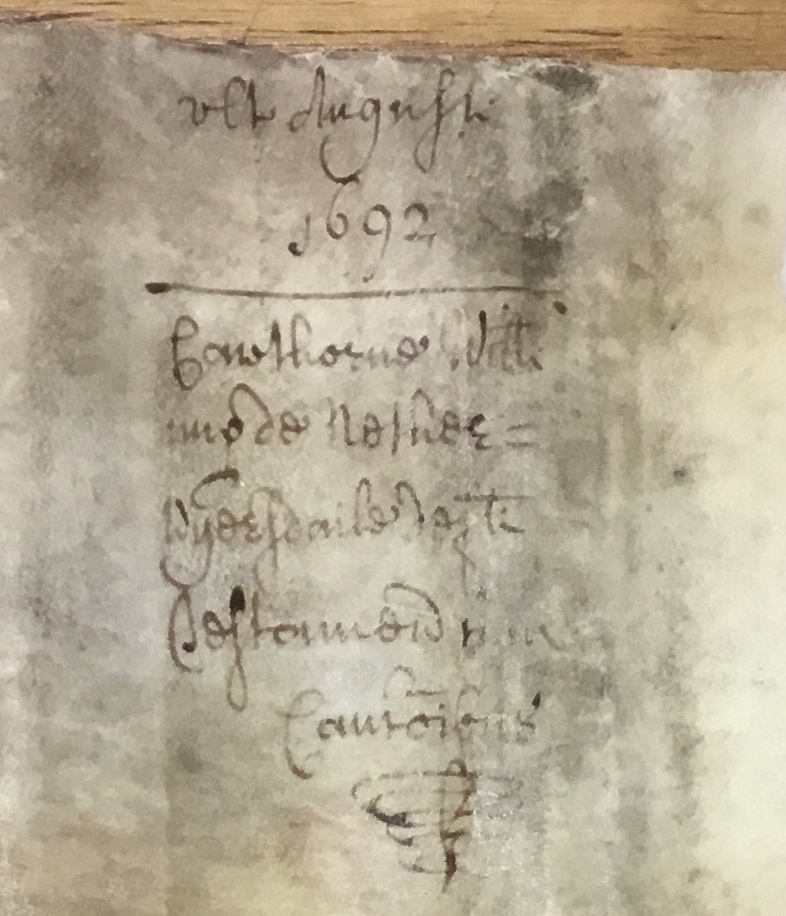
The first William, born in Wyresdale, became the Clerk to the Hospital of St Bartholomew, in London, a post of some importance and responsibility. The income apparently enabled him to buy land and other property, both in Middlesex and in Wyresdale (then spelled Wyersdale). He died aged 76 and left his land in Wyersdale to his nephews William and Christopher, and his land in Middlesex to Christopher. He also left an endowment to support a school in Abbeystead, which he had already erected, and which still exists.
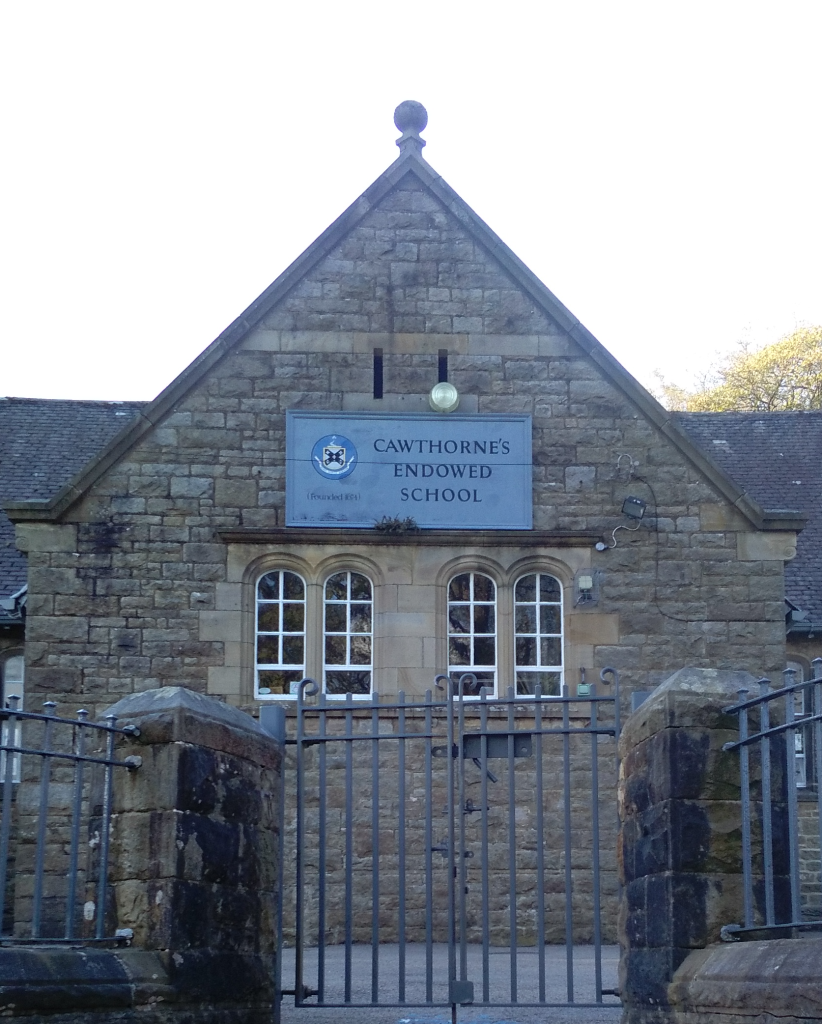
The second William Cawthorne died only 10 years after his uncle, in 1692, leaving the Wyresdale land to his son John. His will included “it is my mind and will That my said son shall enter into the sole possession of all those messuages tenements lands premised with their and every of their appurtenances scituate lying and being in Goosnargh and Over Wyresdale aforesaid according to severall settlements made by my most affectionate Uncle and exceeding great Benefactor William Cawthorne late of London Gentleman deceased.”

This second William’s brother, another Christopher Cawthorne, died over 25 years after him, in 1719. Like the first William, he lived in London, and, as stated in his uncle’s will, he inherited the Cawthorne land in Middlesex. It seems that his uncle also left him the vaccary of Abbeystead, probably by an earlier settlement.
.
The wills of the next descendent members of the family were only available as hard copies at Lancashire Archives, so I was able to access these only after lockdown had been lifted.
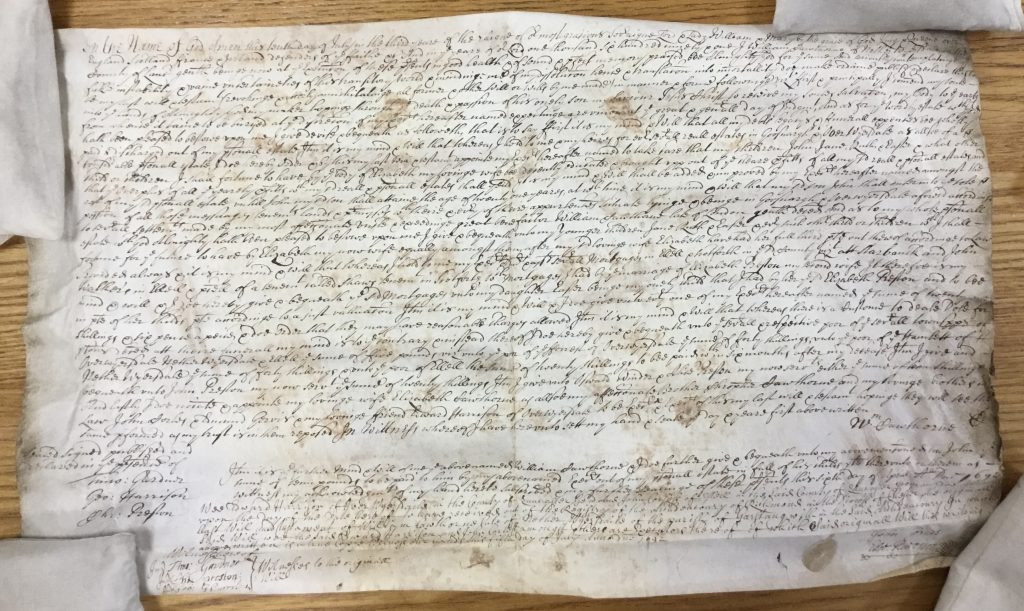
I then also looked at hard copies of some of the earlier wills which I had read on line. I found that William Cawthorne’s, dated 1692, was on a roll of stiff parchment. I had to weight the corners to keep it flat. It was written with a quill pen, in landscape format, so was difficult to follow. The digital version had been easier to read because I could zoom in to enlarge sections which were not easy to decipher.
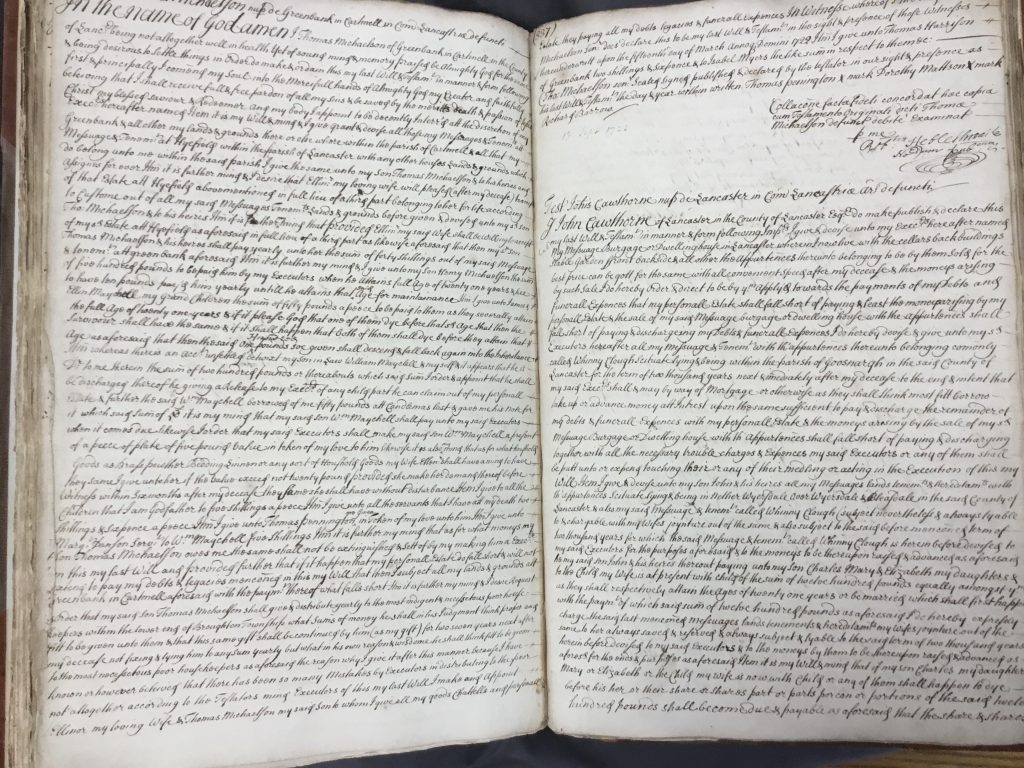
The next will, of the second William’s sons, John Cawthorne (1675-1722), was in a huge leather-bound book of over 500 thick pages containing copies of many wills. His will was dated “the twenty sixth day of February anno domini 1722”. He left “My Messuage Burgage Dwelling house in Lancaster wherein I now live…”. Also he states “Whereas I have a great quantity of wast and fell ground in Marshaw in Over Wyresdale capable of Improvement.”
It confirmed that he inherited the land and property in Wyresdale which had been owned by his father, as described above. This John’s son, another John Cawthorne, died at Lancaster in 1747, and so did his other son, Charles. Neither of these brothers had married, so their father’s inherited property was then divided between their two sisters, Mary and Elizabeth.
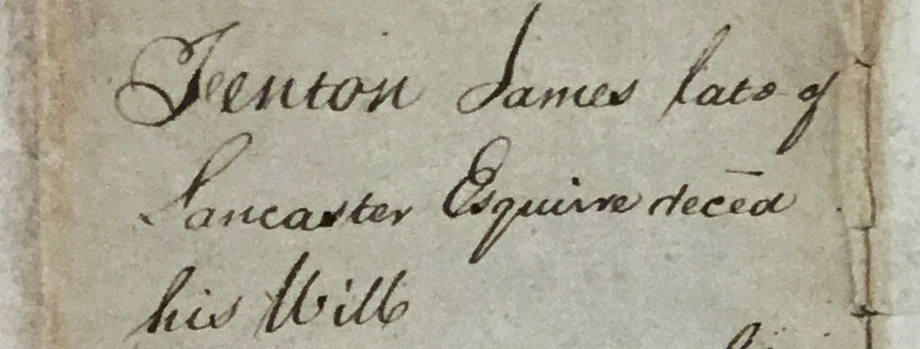
James Fenton, a Lancaster judge who already owned land in the area himself, married Elizabeth Cawthorne in 1748, so combining much of the landholdings of the two families. His will, dated 1791, was on one sheet of thin paper, about A4 size, folded. It was falling apart, and had been repaired with staples.

It stated, “I give and bequeath unto my dear and loving Wife Elizabeth….all my personal Estate and Effects whatsoever. I also give and devise unto my said Wife All my real Estate whatsoever and wheresoever situate (not settled by me upon the marriage of my Eldest Son John)”. So it appears that he had left all this land to their son John in an earlier settlement at the time of his marriage.
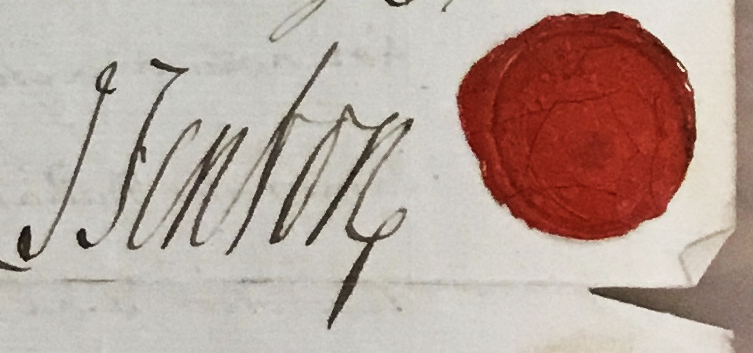
This John changed his name to John Fenton Cawthorne as a condition of inheriting the land in Middlesex owned by his relative. So, simply through family inheritance, he then became the owner of a large amount of land. He died in 1831, with no heirs, and apparently with large debts. His Wyreside estate of 6000 acres was sold in 1835, which appears to be the end of landownership by these two families in this area.
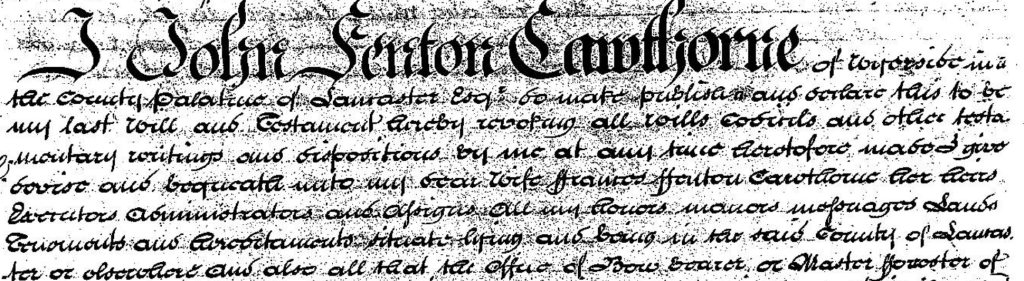
Although it had been helpful to be able to access digitised versions of some of these documents online, actually touching, carefully unfolding, weighting down, and then slowly deciphering the flowing curlicued hand-writing, and the archaic spelling and phrases in the two- to three-hundred-year-old documents was all a tactile, linguistic, and visual treat, and became an unexpected and invaluable experience in itself. I couldn’t help wondering how many, or perhaps how few, people had touched these pages since the individual landowning will-makers had appended their signatures and seals at the bottom.
LANDED(COCKERSAND TO BOWLAND):further research